





Up to 100 hours of free migration
Users, groups, SCORM packages, and completion history all moved.
The longer you stay, the more it costs.
You require a solution built around the way you work. And you’re ready for a custom platform tailored to your workflows and learners.
And it turned into years of plugins, workarounds, and code nobody wants to touch. Funny thing for a free platform.
And it barely works. There's no vendor support, no API, and the one person who understands it could leave tomorrow.
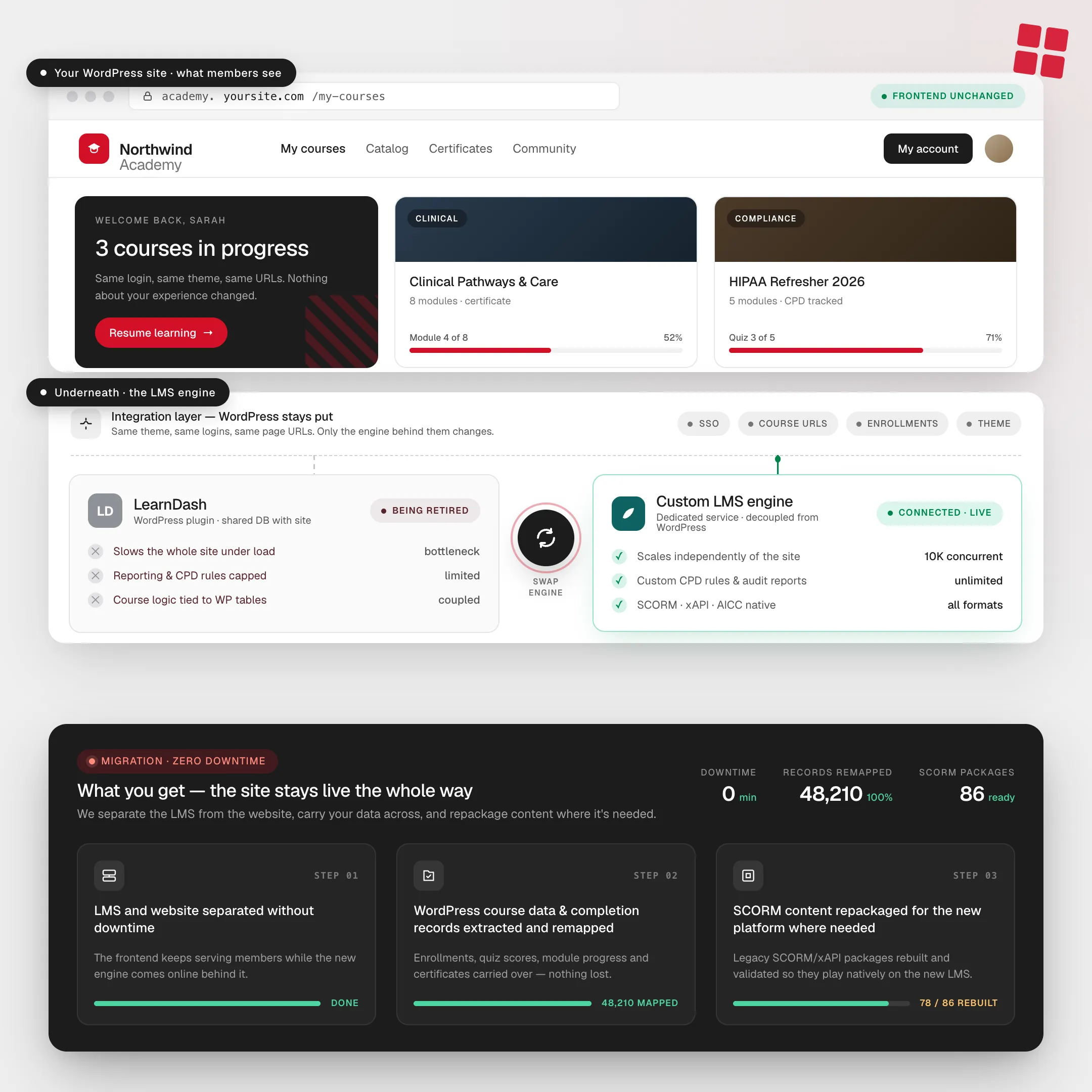
Academy Smart handles migration as a controlled transition. Your old LMS stays live until the new one is validated. Your learners keep training throughout, and your data moves over intact.
Users, groups, SCORM packages, and completion history all moved.
Training continues on your existing platform while the new one is being built.
We don't cut over until you've tested the new system and signed off on it.
Users, groups, SCORM packages, and completion history all moved.
Training continues on your existing platform while the new one is being built.
We don't cut over until you've tested the new system and signed off on it.
How we approach migrations from the platforms our clients are leaving behind.
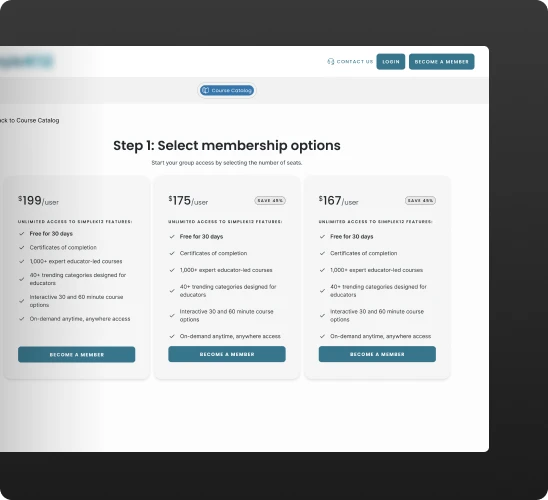
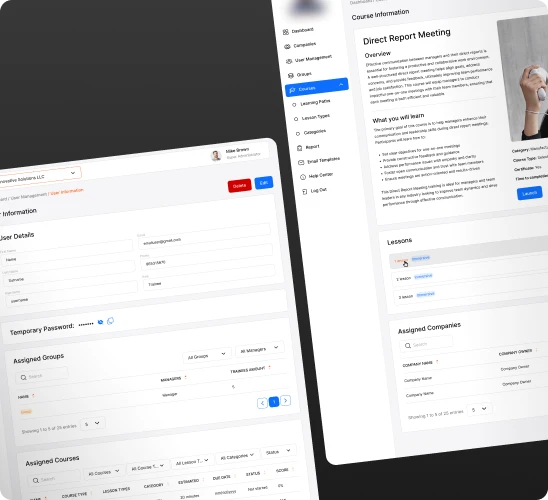
We audit your Moodle setup, separate the logic worth preserving from technical debt, and rebuild it on a modern stack.
We extract your data however it exists (database dumps, spreadsheets, manual records), normalise it, and map it to your new LMS’s structure.
We build a dedicated LMS that runs behind your existing WordPress frontend. Your members log in the same way, see the same experience, and never notice the switch.
Here's how we move you over.

We run a 30-minute consultation to understand your case.

We go through your current platform, data structure, custom logic, and integrations.

We design your new LMS and plan how the migration will run.

We build the new LMS and run both systems in parallel.

We move traffic over in stages and switch off the old system once everything checks out.
Check out what they have to say about working with Academy Smart.


















…across SaaS, open-source installs, legacy, and custom builds. We've seen the messy data, the undocumented logic, and the edge cases.

We work with many LMS APIs. If you're migrating to a new LMS, we can build custom integrations to minimize manual administration.

Common flows like user sync, access rules, and reporting are already solved, so we can focus on what’s specific to your business.

We’ve been building LMS solutions since 2009. We know how learning systems behave with real users and data — and what to expect.
…across SaaS, open-source installs, legacy, and custom builds. We've seen the messy data, the undocumented logic, and the edge cases.
We work with many LMS APIs. If you're migrating to a new LMS, we can build custom integrations to minimize manual administration.
Common flows like user sync, access rules, and reporting are already solved, so we can focus on what’s specific to your business.
We’ve been building LMS solutions since 2009. We know how learning systems behave with real users and data — and what to expect.
Migration is part of every LMS project we do. For most clients, it runs during the final 4–6 weeks of the build, once the new platform is live in staging and validated. How long that takes depends on how much data you have, how many systems you’re moving from, and how much custom logic needs to carry over. We give you a timeline during discovery before any work begins.
It’s included. Every LMS project we take on comes with up to free 100 hours of migration: users, groups, course content, SCORM packages, and completion history. For most clients that covers everything. If your situation is more complex (multiple legacy systems, years of fragmented records, custom reporting logic), we flag anything outside the standard inclusion during discovery before you commit.
We need one internal point of contact (typically someone from L&D, HR Ops, or IT) on your part who can confirm your business rules and sign off on decisions. Then, while we handle the technical work, they’ll be validating that everything matches how your organisation runs.
We check for this specifically during discovery. We document things like certificate rules, course sequencing, branch structures, and access logic based on job role or membership status. If something was a workaround on your old system, we’ll often rebuild it properly so you’re not carrying the same problem forward.
No. Completion records, scores, certificates, timestamps all move with you. Before we touch anything, we document what you have, agree on how it should be displayed in the new platform, and confirm every record is accounted for. If someone completed a course three years ago, that record is there on day one of the new system.
They shouldn’t notice interruptions at all. That’s the goal. We run the new LMS in parallel with your existing one (users, progress, and completions stay in sync) and only move traffic over in stages once everything is validated. The old system stays live until that moment. We’ve done this with 25,000+ learners at Teachers of Tomorrow without a single disruption to active training.
It’s actually the right time. Most LMS projects take 3–6 months to plan and build properly, so starting while you’re still in your contract means you’re ready to switch the moment it expires. We’ll scope the project, agree on the architecture, and have everything ready to go when your contract ends.
Yes, and it’s more common than you’d think. Most organisations come to us with a mix of clean user data, structured completion records, fragmented course history, and a mix of spreadsheets. We assess what you have during discovery, normalise what can be normalised, and agree upfront on what’s worth migrating and what isn’t.
Book a free consultation and we'll assess you what your migration will take.